 vs. Cisco Umbrella
 ScoutDNS vs Cisco Umbrella: Which DNS Security Platform Fits Your Organization?
Cisco offers enterprise-scale DNS intelligence and a path into a broad SSE platform. ScoutDNS gives MSPs and IT teams focused DNS protection, detailed response visibility, practical client controls, flexible terms, and support included.
The quick answer
Choose Cisco Umbrella or Secure Access when Cisco ecosystem integration, mobile and Chromebook coverage, or a broader SSE roadmap is the priority. Choose ScoutDNS when you want a focused DNS security platform that is easier to purchase and operate across customer or business environments.
A note on names: Cisco’s DNS security portfolio now spans Umbrella DNS and Cisco Secure Access DNS Defense, deployed on endpoints through the modular Cisco Secure Client. OpenDNS, the product many admins remember, became Cisco’s enterprise DNS security after the 2015 acquisition. This comparison focuses on the protective-DNS, content-filtering, roaming-protection, reporting, and MSP-management capabilities buyers commonly compare with ScoutDNS.
What both platforms do well
Why organizations choose ScoutDNS
Focused DNS security
Purpose-built protective DNS that works beside your existing VPN, ZTNA, firewall, endpoint, and SIEM stack.
Simpler purchasing
Published pricing, a $50 MSP minimum, month-to-month terms, support included; 50% to 60% less in comparative quotes we have reviewed for similar seat counts and support levels.
One-action troubleshooting
Disable and re-enable any individual roaming client remotely from the Control Plane, then restore it just as fast.
Full DNS-response visibility
See the answers, not just the requests: 30 days of searchable query logs with full RDATA and raw response inspection.
Trusted-TLD policy
Allow the TLD namespaces your organization needs and block unapproved or newly introduced TLDs by default.
Cloud-managed on-prem relay
Remotely adopted, fully managed in the console: subnet and VLAN policy with encrypted DNS for BYOD, guest, and headless devices.
1. Stay focused on DNS security without adopting a broader SSE stack
Get the DNS security, filtering, roaming protection, and visibility you need without adopting a broader SSE platform. ScoutDNS is purpose-built around protective DNS and works alongside the VPN, ZTNA, firewall, endpoint, and SIEM tools you already use.
Cisco’s portfolio breadth is a strength for organizations consolidating on Cisco, but it can introduce more products, packages, modules, and entitlements than a DNS-focused buyer needs.
2. Purchase and support the service on simpler terms
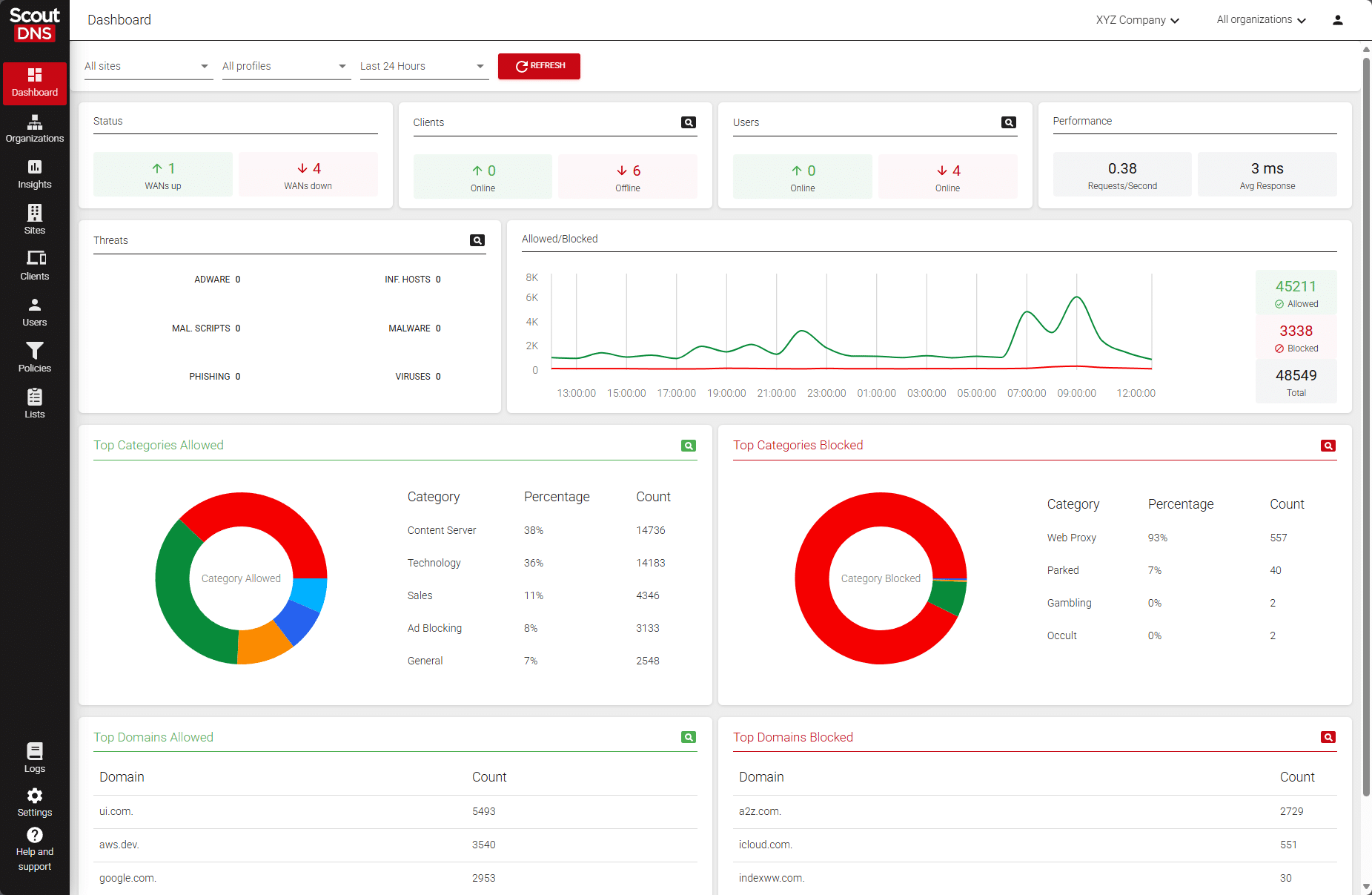
ScoutDNS keeps DNS security purchasing straightforward with published pricing, a $50 monthly MSP entry point, month-to-month or annual options, usage-based scaling, and support included. In comparative Cisco Umbrella DNS quotes we have reviewed, ScoutDNS came in 50% to 60% less for similar seat counts and support levels.
Cisco directs buyers to a partner or sales team for pricing, and enhanced 24x7 support is an add-on for Umbrella DNS packages and required for Secure Access packages.
Savings based on comparative quotes reviewed August 2026. Cisco pricing is quote-based and varies by partner, package, seat count, support entitlement, and term.
3. Troubleshoot individual roaming clients remotely
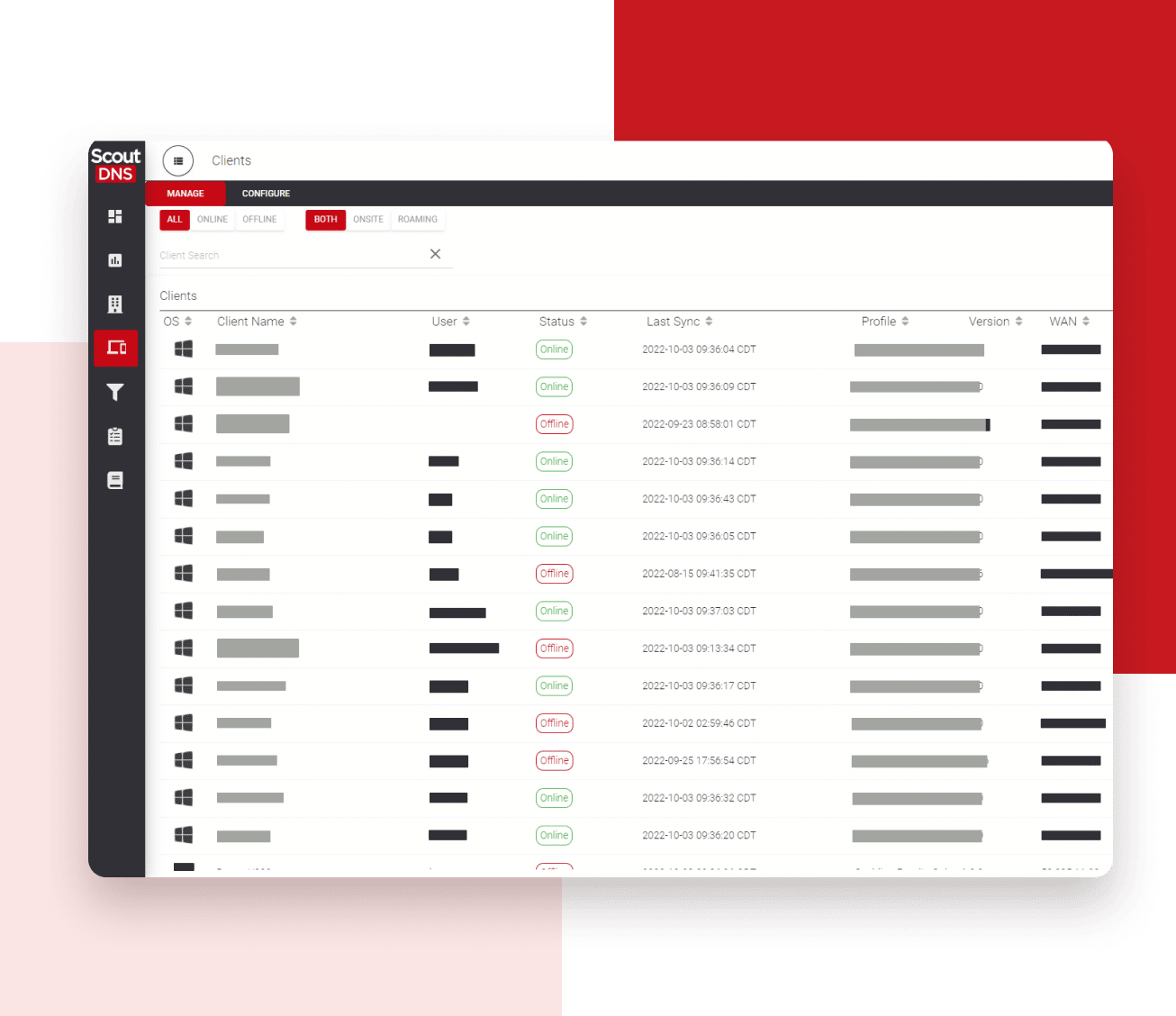
Temporarily disable and re-enable an individual ScoutDNS roaming client from the Control Plane to troubleshoot an endpoint without uninstalling protection or accessing the device directly. Isolating DNS as a factor takes seconds, and protection is restored just as fast.
Cisco provides a mature roaming-computer dashboard and centrally configurable settings. As of August 6, 2026, the public roaming-client documentation we reviewed does not list an equivalent temporary per-device disable action.
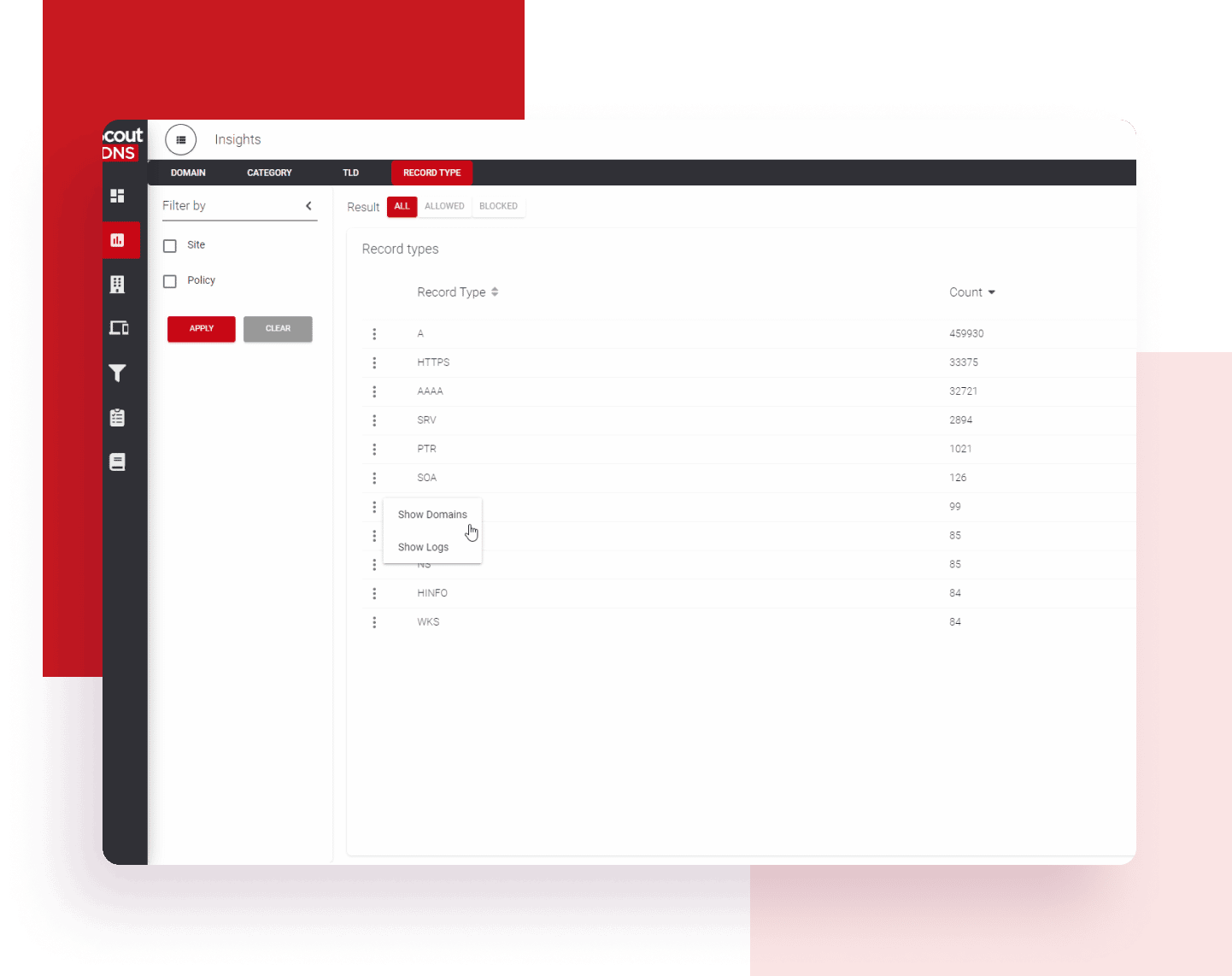
4. Investigate DNS answers, and trust only the TLDs you approve
Investigate DNS requests and the answers they returned with searchable query history, full RDATA capture, record-type and TLD views, drill-down analytics, and SIEM export. The DNS answer itself, including full CNAME chains, is part of the same workflow as your query logs.
ScoutDNS also supports a trusted-TLD policy model: allow the namespaces your organization needs and block unapproved or newly introduced TLDs by default. Cisco supports broad TLD allows and blocks through destination lists; the trusted-only default model is the ScoutDNS distinction.
ScoutDNS vs Cisco Umbrella at a glance
| Comparison factor | ScoutDNS | Cisco Umbrella / Secure Access |
|---|---|---|
| Primary product focus | Purpose-built protective DNS, content filtering, roaming protection, and DNS visibility | DNS protection with a path into a broader Cisco SSE and security platform |
| Roaming laptop protection | Windows and macOS clients | Windows and macOS via Cisco Secure Client |
| Site and network deployment | WAN forwarding with static or dynamic IP, plus an on-premises relay that is remotely adopted and fully cloud-managed: policy by subnet or VLAN, with encrypted DNS to the ScoutDNS cloud for BYOD, guest, and headless devices | DNS forwarding, network devices, and virtual appliances |
| Mobile-device and Chromebook coverage | Not currently available for iOS, Android, or Chromebook | Managed iOS, Android, and Chromebook options available |
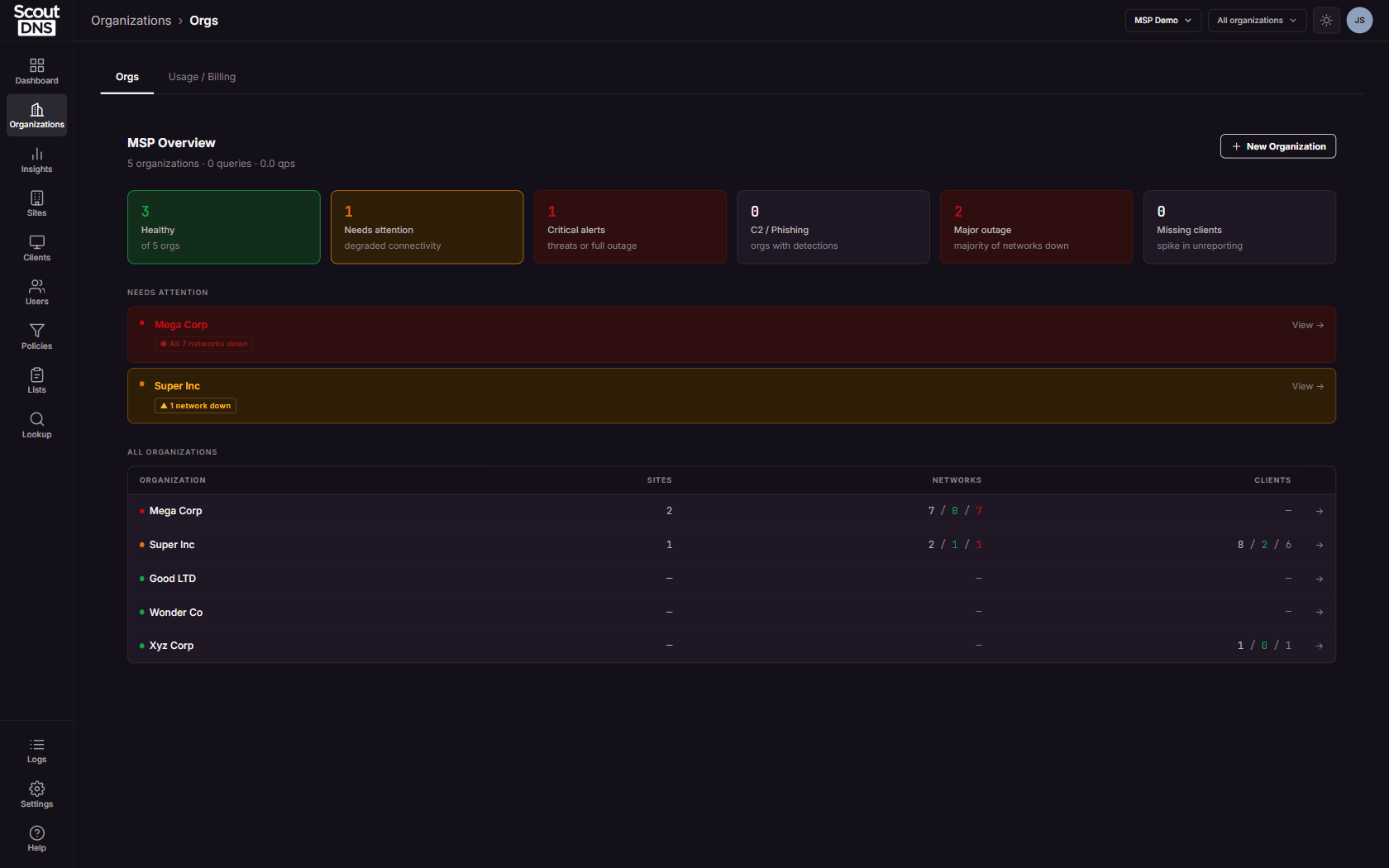
| MSP management | Multi-tenant health, configuration, roles, usage, and billing in one ScoutDNS account | Mature Managed Services Console, centralized settings/reporting, co-branding, and integrations |
| MSP purchasing | Published entry pricing; month-to-month or annual options; support included | Quote-based licensing and multiple purchasing paths; support entitlement varies by package |
| Individual client troubleshooting | Remote disable and re-enable from the ScoutDNS Control Plane | As of August 6, 2026, the public documentation we reviewed does not list an equivalent temporary per-device disable action |
| DNS investigation | 30 days of searchable query-log history, full RDATA capture, raw response inspection, drill-down analytics, and SIEM export | Up to 90 days of detailed activity, APIs, S3 export, and Cisco Investigate/package-dependent enrichment |
| TLD policy | Block/allow entries plus a trusted-only TLD model | Broad TLD allows and blocks through destination lists |
| Identity-based policy | Active Directory and Entra ID group policy support | Active Directory, Entra ID, Okta, and other identity integrations |
| Broader SSE controls | Designed to work beside a customer’s chosen security stack | SWG, CASB, DLP, FWaaS, ZTNA, VPNaaS, RBI, and other package-dependent capabilities |
| Block-page bypass codes | Not currently offered | Available |
| Published product pricing | Public ScoutDNS plan and MSP entry pricing | Contact Cisco or a partner for current pricing |
Last checked August 6, 2026. Sources: ScoutDNS pricing, Cisco Umbrella packages .
Where Cisco stands out
A comparison you can trust has to say where Cisco is genuinely strong. If these are your priorities, Cisco deserves a serious look:
- Threat-intelligence scale: more than 30,000 organizations and hundreds of billions of daily internet requests feed Cisco’s global threat telemetry.
- A full SSE platform path: Secure Access packages can add secure web gateway, CASB, DLP, firewall-as-a-service, ZTNA, VPNaaS, and remote browser isolation.
- Cisco ecosystem integration: documented deployment and integration across Secure Client, Meraki, Cisco networking, Splunk, XDR, APIs, and multiple identity providers.
- Broad device coverage: roaming protection for Windows and macOS, plus managed Android, managed iOS through Cisco Security Connector, and Chromebooks.
- Longer detailed retention: up to 90 days of detailed DNS activity retention, with Cisco-managed or customer-managed S3 log storage options.
- Advanced investigation options: depending on package: Investigate data, app discovery, intelligent proxying, selective decryption, and URL/file inspection.
Which platform is right for you?
Choose ScoutDNS when:
- You primarily need protective DNS, content filtering, roaming laptop protection, and DNS-layer visibility
- You want a transparent, lower-friction commercial model with month-to-month MSP terms
- You want support included rather than a separate support entitlement
- You want to disable and re-enable an individual roaming client remotely during troubleshooting
- You want full RDATA capture and DNS response inspection alongside searchable query logs
- You want a trusted-TLD model that blocks unapproved or newly introduced TLDs by default
- You prefer to keep your existing VPN, ZTNA, firewall, or web-security stack
Choose Cisco Umbrella or Secure Access when:
- You want to standardize on Cisco security, networking, Meraki, Splunk, or XDR products
- You need a path from DNS protection into SWG, CASB, DLP, firewall, ZTNA, or a larger SSE architecture
- Native iOS, Android, or Chromebook coverage is required today
- Cisco’s scale, global threat telemetry, and enterprise ecosystem are deciding factors
- 90-day detailed retention, S3 logging, or Cisco Investigate matter more than an integrated full-RDATA workflow
- Administrator-issued block-page bypass codes are required
Frequently asked questions
Is Cisco Umbrella the same as OpenDNS?
They share a lineage. Cisco acquired OpenDNS in 2015 and later rebranded the enterprise security services as Cisco Umbrella. The OpenDNS name continues for Cisco’s home-user products, while business capabilities now live in Umbrella and Cisco Secure Access. If you are searching for an OpenDNS alternative for business use, Umbrella and Secure Access are the current Cisco products to compare.
What is the difference between Cisco Umbrella and Secure Access DNS Defense?
Cisco states that Umbrella DNS Security is evolving into Cisco Secure Access DNS Defense as part of its broader Secure Access platform. The DNS-layer capabilities buyers compare with ScoutDNS exist in both, but packaging and naming are in transition, so confirm current package details with Cisco or a partner.
Does ScoutDNS replace Cisco Secure Access?
No. ScoutDNS replaces the protective-DNS and content-filtering layer, not a full SSE platform. If you need secure web gateway, CASB, DLP, or ZTNA from one vendor, that is Cisco’s broader platform story. ScoutDNS is designed to deliver focused DNS security alongside whatever VPN, ZTNA, firewall, and endpoint tools you already use.
Does ScoutDNS protect remote workers on laptops?
Yes. The ScoutDNS Windows Client and macOS client protect off-network workers on supported laptops wherever they connect, with policies and visibility managed centrally from the same console as your networks.
Which platform is better for MSPs?
Both offer real multi-tenant administration. Cisco provides a mature Managed Services Console with co-branding and integrations. ScoutDNS offers a lower entry point at $50 per month, month-to-month or annual terms, usage-based billing, all partner features included, and support included, which many MSPs find easier to buy and operate.
Does ScoutDNS support iOS, Android, or Chromebooks?
Not currently. ScoutDNS covers Windows and macOS roaming devices plus network-level deployment. Cisco documents managed iOS, Android, and Chromebook options, which is a genuine Cisco advantage if those devices are in scope today.
Can ScoutDNS work with my existing VPN or ZTNA platform?
Yes. ScoutDNS is designed to coexist with your existing VPN, ZTNA, firewall, and endpoint security. The Windows Client is validated alongside common VPN and ZTNA agents, and DNS-layer protection continues to apply on and off the corporate network.
Focused DNS protection, without the platform overhead
If your priority is focused DNS protection, clear visibility, and straightforward MSP operations, see how ScoutDNS fits your environment. Start a full-featured 14-day trial or schedule a comparison walkthrough.
About this comparison: based on a point-in-time review of publicly available vendor documentation, pricing pages, and product materials, last checked August 6, 2026. Product capabilities, packaging, and pricing change frequently, and Cisco Umbrella may have updated its offering since our review. Nothing on this page is a claim about your specific quote or environment; verify current details with each vendor before making a purchasing decision. Cisco Umbrella and related marks are trademarks of their respective owners. ScoutDNS is not affiliated with or endorsed by Cisco Systems, Inc. See something out of date? Let us know and we will review it.