DNS wasn’t designed with attackers in mind. It was designed to be simple, global, and resilient, and those same properties make it attractive for abuse. Understanding why attackers keep coming back to DNS means looking at the protocol’s architecture and operating assumptions, not at any particular threat campaign.
DNS is required for almost everything
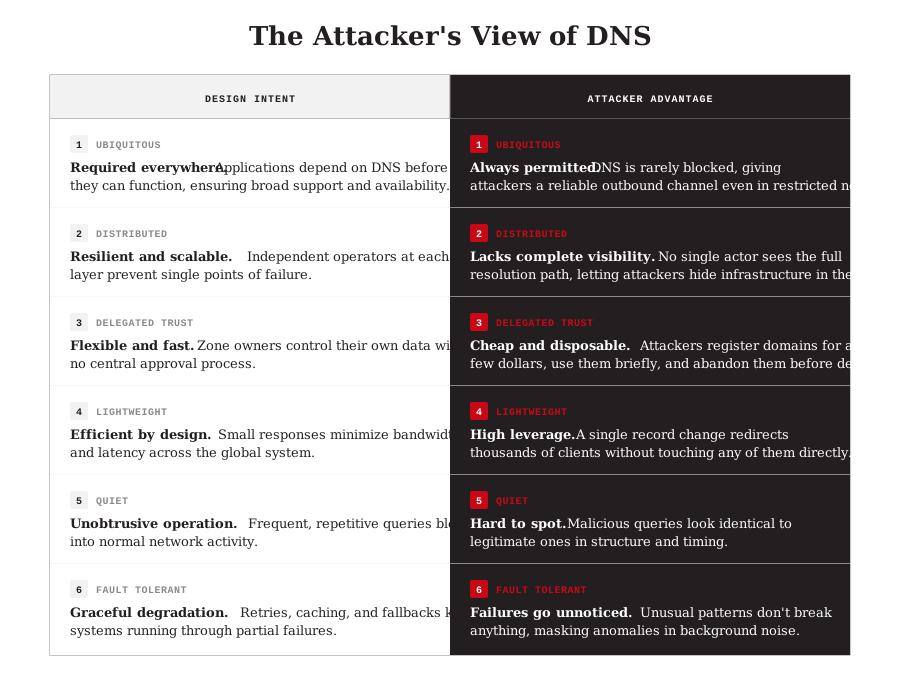
Most networked applications rely on DNS before they can do anything useful. A browser can’t fetch a page, a mail server can’t deliver a message, and an endpoint can’t reach an update service without first resolving a name.
That makes DNS a dependable starting point. An attacker who controls or influences DNS responses affects many downstream systems without compromising any of them directly. And because basic functionality depends on it, DNS is the traffic networks almost never turn off. Ports and protocols get restricted while resolution stays open.
DNS is distributed and loosely coupled
DNS isn’t a single service with a single control point. It’s a distributed system of clients, recursive resolvers, authoritative servers, and caches run by many independent parties.
The loose coupling is intentional. It’s where the resilience comes from. It also means no single actor sees or controls a resolution end to end. Attackers park infrastructure in the parts of the system that are hardest to observe: authoritative zones on commodity hosting, fast-changing subdomains, records with very short lifetimes.
DNS trust is delegated
DNS works through delegation. Each zone owns its own data, and once delegation is established, resolvers generally trust authoritative answers.
No global approval process stands between anyone and a new domain. As long as delegation is valid and responses are well formed, they’re accepted. That keeps DNS flexible and scalable, and it lets attackers create and abandon domains cheaply, faster than blocklists and takedowns typically move.
DNS responses are small but powerful
A DNS response carries very little data, and that data steers important decisions. The address in an A or AAAA record decides where traffic goes. An MX record decides where email lands.
That influence is why DNS makes such an effective control channel. Changing one record can redirect traffic, activate dormant behavior, or cut communication, with no client-side configuration touched. Short TTLs sharpen the effect, letting changes take hold quickly through entirely standard mechanisms. The same properties support DNS tunneling, where the queries and responses themselves become a covert data channel.
DNS traffic looks ordinary
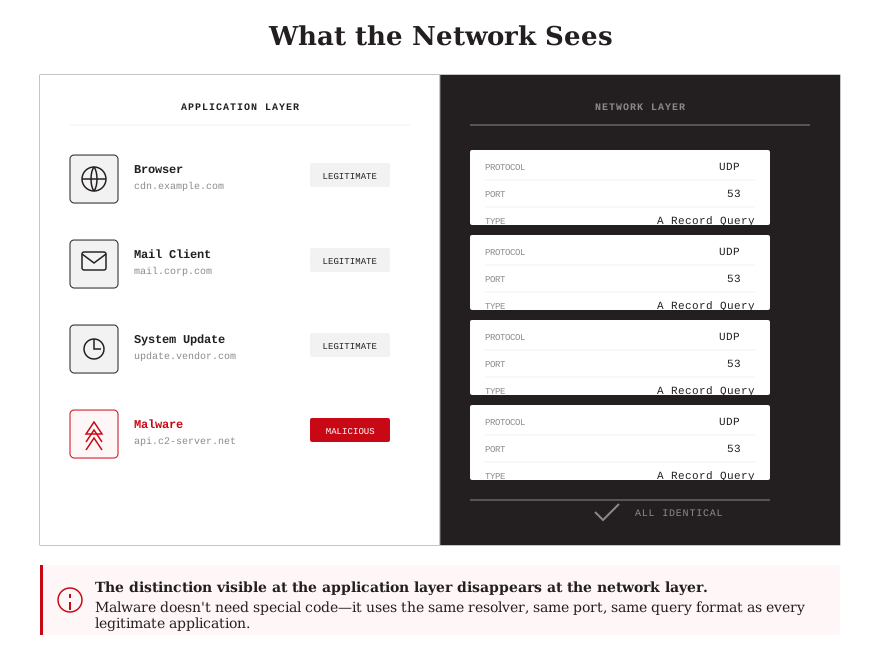
DNS queries are constant and repetitive on any network, generated by operating systems, applications, and background services alike. An individual malicious query can look exactly like a legitimate one, especially when tucked inside expected application behavior, so detection often depends on patterns across many queries.
Encrypted transports such as DNS over HTTPS and DNS over TLS reduce visibility further. That’s a genuine privacy improvement, and it removes inspection opportunities defenders used to count on. Both things are true at once.
DNS fails softly
When DNS fails, systems retry, fall back, and degrade gracefully. Clients query multiple resolvers, reuse cached data, and attempt alternate names.
That tolerance for partial failure is what keeps DNS reliable, and it gives abusive behavior a place to hide. Unusual query patterns break nothing, so nothing looks wrong from the application’s side.
Working as designed
DNS is attractive to attackers because it does exactly what it was built to do. It provides a global, reliable naming system with minimal friction and broad reach.
The abuse comes from how DNS fits into larger systems, not from a flaw in the protocol. DNS doesn’t authenticate intent, and never claimed to. DNSSEC can verify that signed DNS data is authentic and unmodified, not that it’s benign. A perfectly valid, perfectly signed answer can still point somewhere hostile.
Summary
Attackers use DNS because it’s ubiquitous, distributed, trusted by design, and operationally quiet. Those are architectural properties, not implementation mistakes, and they aren’t going away.
Defensive approaches that respect how DNS actually works, such as filtering applied at the resolver layer, tend to outperform approaches that assume DNS can be tightly controlled without tradeoffs.